- The Point by Modern Sciences
- Posts
- Your guide to the 2025 Nobel Prizes in Science
Your guide to the 2025 Nobel Prizes in Science
The Point by Modern Sciences - October 9, 2025

Don Smith
October 09, 2025
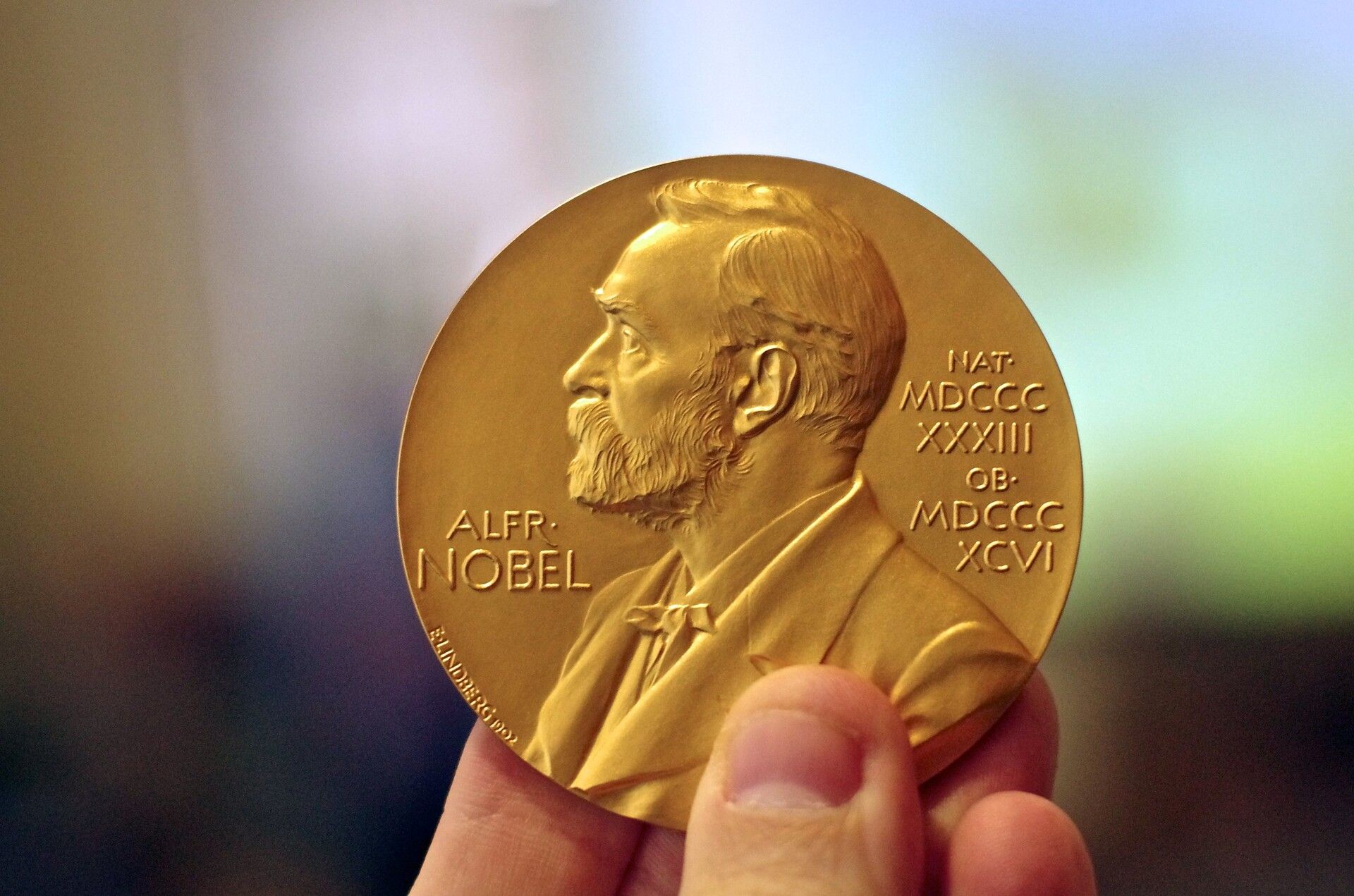
By The Modern Sciences Team | October 9, 2025 |
It’s Nobel Prize week, Cultivators of Curiosity!
Welcome to the 40th volume of The Point by Modern Sciences! This week, we turn our focus to the pinnacle of scientific achievement: the 2025 Nobel Prizes. The work of this year's laureates represents decades of curiosity and persistence, culminating in breakthroughs that are fundamentally reshaping our world.
Inside, we first explore the discovery of our immune system's "security guards"—the regulatory T cells that prevent our bodies from attacking themselves, opening revolutionary new doors for treating cancer and autoimmune diseases. Next, we take a leap into the bizarre world of quantum physics, where laureates proved that an entire electrical circuit can behave like a single atom, a foundational discovery for the quantum computers of today. Finally, we examine a breakthrough that sounds like science fiction: the creation of "molecular sponges" capable of capturing carbon and harvesting water from the air in deserts. These are the discoveries defining our future, and we invite you to take a closer look.
HEALTH AND THE BODY
Nobel Prize honors discovery of regulatory T cells
The 2025 Nobel Prize in Physiology or Medicine has been awarded to Mary E. Brunkow, Fred Ramsdell, and Shimon Sakaguchi for their discoveries of regulatory T cells and the FOXP3 gene. Their work revealed the "security guards" of the immune system, revolutionizing our understanding of immune tolerance and opening new treatment pathways for cancer and autoimmune diseases.
The Point:
The immune system's 'security guards' have been identified: Shimon Sakaguchi discovered a unique subset of T cells, later named regulatory T cells, that actively prevent the immune system from attacking the body’s own tissues.
A single gene is found to control immune tolerance: Mary Brunkow and Fred Ramsdell pinpointed the Foxp3 gene as the genetic cause of severe autoimmunity in mice and the human disease IPEX.
Two breakthroughs create a new field of immunology: The discoveries were linked, proving that FOXP3 is the master switch for regulatory T cells and launching new therapies for autoimmunity and cancer.
MATH AND THE SCIENCES
Trio wins physics Nobel for quantum 'tunneling' in a circuit
The 2025 Nobel Prize in Physics honors John Clarke, Michel H. Devoret, and John M. Martinis for their groundbreaking experiments in the 1980s. They demonstrated that an entire electrical circuit could exhibit bizarre quantum behaviors, such as tunneling through energy barriers and absorbing energy in discrete packets, proving that quantum mechanics can apply to systems large enough to be held in the hand.
The Point:
Macroscopic quantum tunneling is confirmed: A trio of laureates has proved that an entire superconducting circuit, containing billions of particles, can collectively "tunnel" through an energy barrier —a bizarre quantum effect never before observed on this scale.
An 'artificial atom' is created: Their experiment also showed that the circuit had quantized energy levels, absorbing energy in discrete packets just like an atom, which they confirmed by measuring changes in the tunneling rate.
The work lays the groundwork for quantum computing: By demonstrating control over a macroscopic quantum system, their research provided a direct path toward creating superconducting qubits, the fundamental building blocks for many modern quantum computers.
MATH AND THE SCIENCES
3 scientists win Nobel for 'molecular architecture'
Susumu Kitagawa, Richard Robson, and Omar M. Yaghi have won the 2025 Nobel Prize in Chemistry for developing metal-organic frameworks (MOFs). These revolutionary porous materials act like molecular sponges, with groundbreaking applications in carbon capture, water harvesting from desert air, and pollutant removal. Their work has opened up a new frontier in materials science, providing custom-designed solutions to address global challenges.
The Point:
A new molecular architecture is recognized: The prize honors the creation of metal-organic frameworks, which are precisely designed crystalline structures with vast internal spaces that can be tailored for specific chemical applications.
Three pioneers laid the groundwork: Richard Robson conceived the foundational idea, Susumu Kitagawa achieved critical stability and introduced flexibility, and Omar Yaghi created exceptionally porous frameworks through rational design.
MOFs promise to solve global challenges: These materials offer potential solutions for carbon capture, water harvesting from desert air, pollutant removal, and clean energy storage, making them a cornerstone of modern materials science.