- The Point by Modern Sciences
- Posts
- A Prehistoric Highway, the Moon's Hidden Power, & a Recipe to Save Bees
A Prehistoric Highway, the Moon's Hidden Power, & a Recipe to Save Bees
The Point by Modern Sciences - June 25, 2025 (A)

Don Smith
June 25, 2025
By The Modern Sciences Team | June 25, 2025 |
Happy Wednesday, Cultivators of Curiosity!
Welcome to the 25th volume of The Point by Modern Sciences!
In this milestone issue, we’re exploring the hidden forces and historic discoveries that shape life on our planet, from the microscopic to the celestial. First, we zoom in on a modern-day crisis with a groundbreaking solution: synthetic pollen that could reverse honey bee decline and secure our food supply. From there, we turn our gaze to the Moon, revealing how its silent, cyclical influence is a powerful conductor of animal behavior across the globe—from coral reefs to tropical forests. Finally, we journey millions of years into the past to walk a “dinosaur highway” in the UK, where newly discovered footprints are rewriting what we know about the giants who once ruled the Earth. These stories reveal the intricate connections that define our world, and we invite you to dive in and explore.
A short message from our friends at ElevenLabs
ElevenLabs is our favorite platform for AI-generated audio. We use it regularly to bring written content to life—whether it’s for narrating articles, sharing ideas, or creating hands-free learning experiences. It’s surprisingly easy to use, yet powerful enough to support complex projects. Here are just a few of the features we love:
Lifelike Voice Generation: Convert written content into ultra-realistic speech that sounds natural and engaging.
Podcast Creation: Turn any text, PDF, or link into a multi-voice podcast with GenFM—ideal for learning on the go or distributing audio content fast.
Voice Customization: Adjust tone, pitch, and style—or clone your own voice for a personal touch.
Multilingual Reach: Translate and dub content across 30+ languages while preserving tone and clarity.
Conversational AI: Build real-time, responsive voice agents that can handle dynamic back-and-forth dialogue.
Developer-Ready Tools: Easily integrate ElevenLabs into your own projects using fast, flexible APIs.
Strong Security: Your data is protected with enterprise-grade security, including SOC2 and GDPR compliance.
Try ElevenLabs for free before the trial ends:
https://try.elevenlabs.io/gs5z72a5o00z

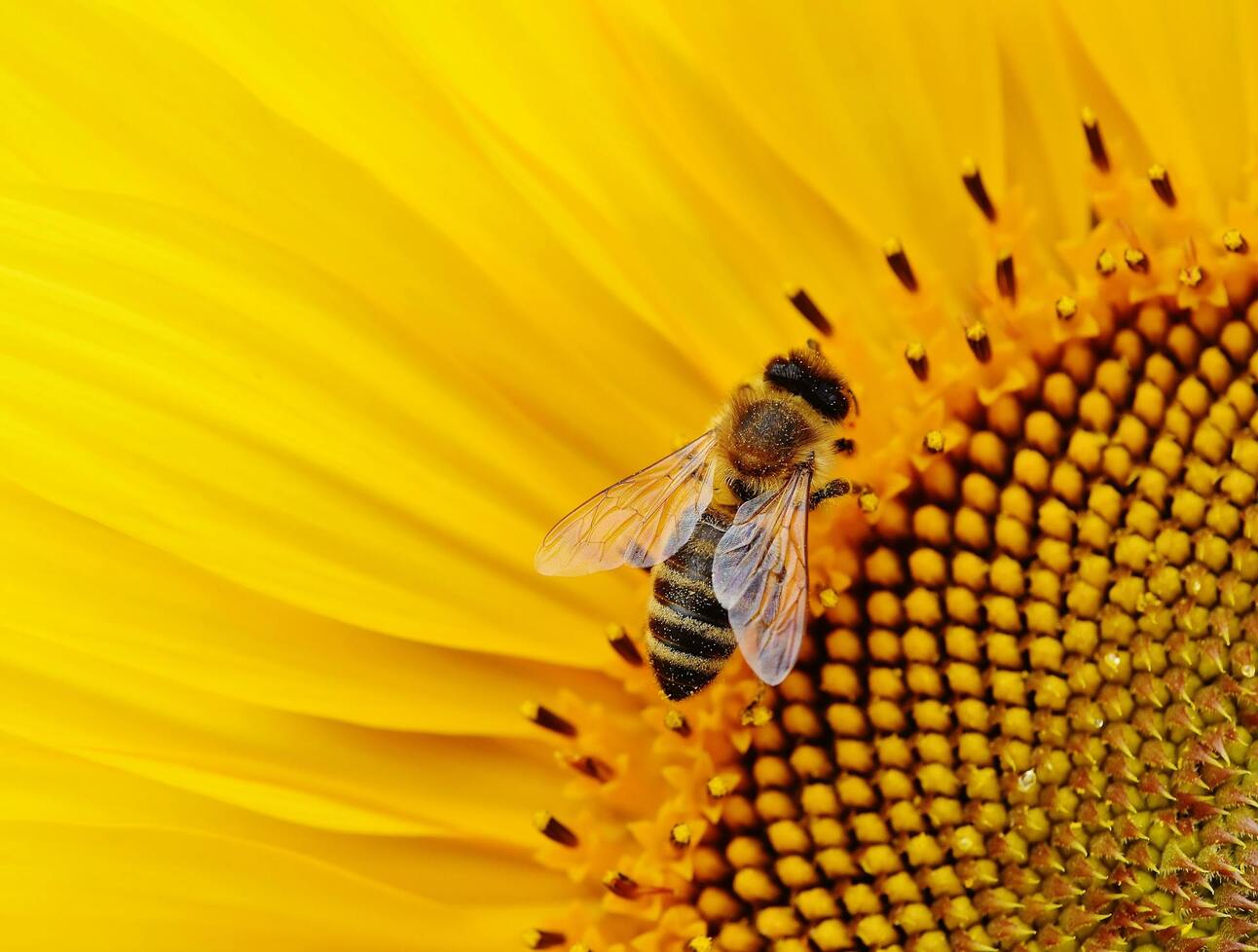
(Photo by Alexas Fotos: https://www.pexels.com/photo/close-up-photo-of-bee-in-flower-2198671/)
ENGINEERING
Researchers Develop Pollen-Replacing Diet to Sustain Honey Bees Year-Round
Researchers at Washington State University and APIX Biosciences developed an artificial food that sustains honey bees year-round, even without natural pollen. The diet, containing the crucial nutrient isofucosterol, helps prevent colony collapse, improving bee health. This breakthrough offers hope for reversing declining bee populations, with the product expected for beekeepers by mid-2026.
The Point:
A synthetic pollen substitute may help reverse honey bee decline: Scientists developed an artificial bee diet that mimics natural pollen and supports colony health during environmental stress.
Key nutrient isofucosterol found to be essential for bee survival: Colonies fed the synthetic diet with this molecule showed healthy development, while those lacking it faced paralysis and collapse.
A new bee diet could boost agriculture and pollination by 2026. The innovation is expected to support commercial beekeeping and improve crop yields, especially in nutrient-poor environments like blueberry fields.
NATURE
Five animals that behave differently in moonlight
Beyond its gravitational pull on the tides, moonlight shapes animal behavior worldwide. For some species, its glow is a crucial cue for synchronized reproduction. For others, it creates a high-stakes game of hide-and-seek between predator and prey. Many creatures have evolved fascinating adaptations to the lunar cycle, from nocturnal birds adjusting their foraging habits to insects navigating by polarized light.
The Point:
Moonlight’s Influence on Animal Behavior: The Moon plays a crucial role in shaping the behaviors of various species, from coral spawning on the Great Barrier Reef to mammals adjusting activity levels in tropical forests. Some animals use moonlight as a resource, while others see it as a threat.
Species Adapted to Lunar Cycles: Many species synchronize their activities with the Moon, such as mayflies timing their mating, nightjars adjusting foraging and migration, swifts ascending to higher altitudes under full moons, and barn owls using moonlight to improve hunting success.
Moonlight Navigation and Survival: Animals like dung beetles rely on moonlight’s polarisation patterns for navigation, ensuring straight paths when moving dung balls. Studies show how lunar cycles impact survival, reproduction, and migration across diverse ecosystems.
NATURE
How we uncovered the UK’s biggest site of dinosaur tracks in a quarry in Oxfordshire
Researchers in Oxfordshire have unearthed the UK's largest dinosaur track site, a vast “dinosaur highway” from the Middle Jurassic period. The remarkably preserved footprints, left 166 million years ago by giant sauropods and carnivorous Megalosaurus, offer a direct glimpse into dinosaur behavior. Their analysis reveals how these ancient animals moved, their size, and how they interacted with their environment.
The Point:
Historic discovery of a 'dinosaur highway': In Oxfordshire, researchers uncovered over 200 dinosaur footprints dating to the Middle Jurassic, forming the largest dinosaur tracksite in the UK and offering insights into ancient ecosystems.
Advanced excavation and analysis: Using photogrammetry and drone imagery, scientists documented detailed 3D models of five trackways, including tracks of Megalosaurus and giant sauropods, revealing data on their movement, size, and interactions.
Prospects for study and preservation: The active Dewars Farm quarry continues to uncover new trackways, with plans for further excavation in 2025 and efforts underway to preserve this significant paleontological site.