- The Point by Modern Sciences
- Posts
- Distant Planets, Bronze Age Wine, and the Limits of AI Research
Distant Planets, Bronze Age Wine, and the Limits of AI Research
The Point by Modern Sciences - June 5, 2025 (A)

Don Smith
June 05, 2025
By The Modern Sciences Team | June 5, 2025 |
Welcome to June, Cultivators of Curiosity!
Welcome to the 22nd volume of The Point by Modern Sciences, where we explore groundbreaking discoveries and critical perspectives in planetary science, archaeology, and artificial intelligence. In this edition, we delve into the discovery of four small planets around Barnard’s Star, shedding light on the prevalence of planets around red dwarf stars, revisit the surprising inclusivity of wine culture in early Bronze Age Troy, challenging long-held assumptions about ancient consumption practices; and critically examine the limitations of OpenAI’s new deep research tool, emphasizing the importance of human oversight in AI-driven analysis.
This volume provides unique insights into the forces shaping our past and future, from the vastness of space to the details of ancient civilizations and the evolving role of AI in research. Whether you’re a space enthusiast, history buff, or tech skeptic, these articles offer valuable lessons that prompt us to rethink what we know about the universe, history, and technology.
A short message from our friends at ElevenLabs
ElevenLabs is our favorite platform for AI-generated audio. We use it regularly to bring written content to life—whether it’s for narrating articles, sharing ideas, or creating hands-free learning experiences. It’s surprisingly easy to use, yet powerful enough to support complex projects. Here are just a few of the features we love:
Lifelike Voice Generation: Convert written content into ultra-realistic speech that sounds natural and engaging.
Podcast Creation: Turn any text, PDF, or link into a multi-voice podcast with GenFM—ideal for learning on the go or distributing audio content fast.
Voice Customization: Adjust tone, pitch, and style—or clone your own voice for a personal touch.
Multilingual Reach: Translate and dub content across 30+ languages while preserving tone and clarity.
Conversational AI: Build real-time, responsive voice agents that can handle dynamic back-and-forth dialogue.
Developer-Ready Tools: Easily integrate ElevenLabs into your own projects using fast, flexible APIs.
Strong Security: Your data is protected with enterprise-grade security, including SOC2 and GDPR compliance.
Try ElevenLabs for free before the trial ends:
https://try.elevenlabs.io/gs5z72a5o00z
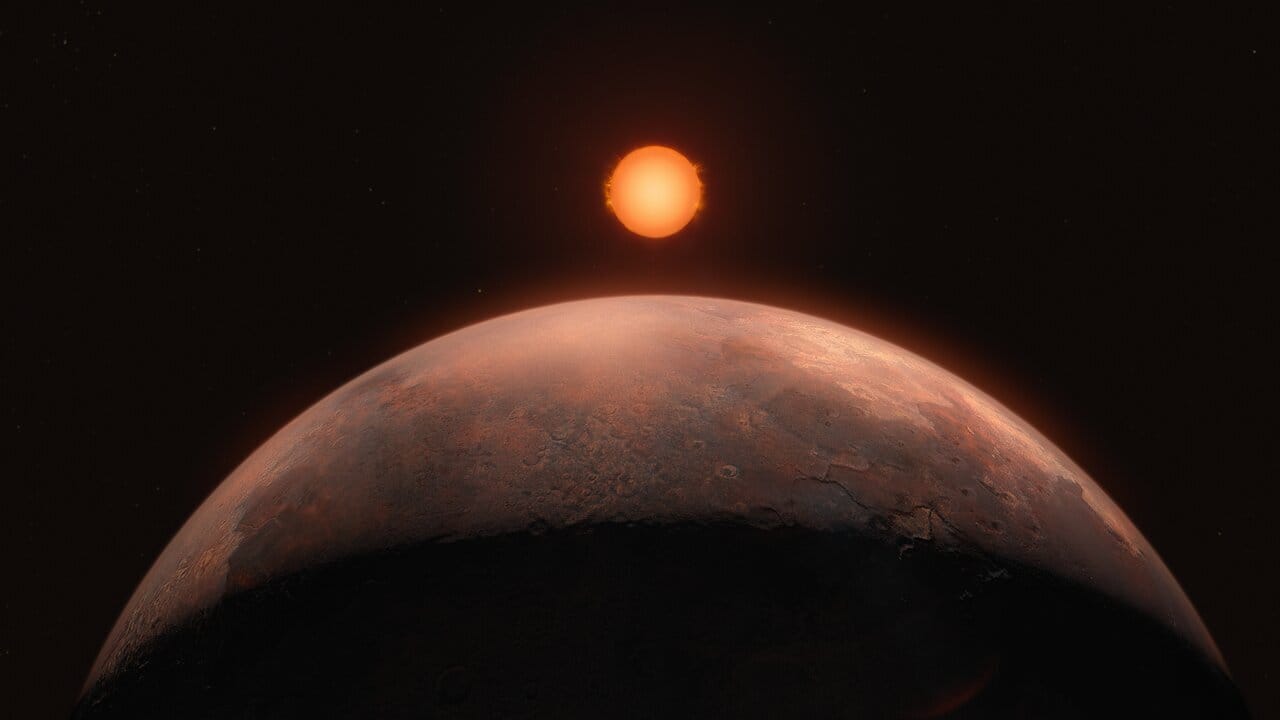
(ESO/M. Kornmesser)
SPACE
Four small planets discovered around one of the closest stars to Earth – an expert explains what we know
Four small, rocky planets have been discovered orbiting Barnard’s Star, one of Earth’s nearest neighbors. Despite their proximity, these planets are likely too hot and airless to support life. Detected through tiny wobbles in the star’s motion, their existence suggests that rocky worlds may be common around red dwarfs—hinting at a galaxy teeming with unseen planets. Read more.
The Point:
Discovery of planets around Barnard’s Star: Using advanced spectrographs on telescopes, astronomers detected four small planets orbiting Barnard’s Star by measuring its motion caused by gravitational tugs from the planets. Confirming these planets required years of monitoring with different instruments to rule out stellar magnetic activity as a false signal.
Characteristics of the planets: The newly discovered planets have short orbital periods (2–7 days) and are likely rocky, with surfaces exposed to intense radiation. Due to their extreme conditions, they are unlikely to support life, and their lack of transits makes further study more challenging.
Implications for planetary science: The discovery reinforces the idea that planets are common around red dwarfs, suggesting there may be more planets than stars in the galaxy. Future missions like ESA’s Plato (2026) aim to find planets in habitable zones, improving our understanding of planetary formation and how our solar system compares to others.
HISTORY
Uncorking the past: new analysis of Troy findings rewrites the story of wine in the early bronze age
New chemical analyses of ancient drinking vessels from Troy reveal that wine consumption was not limited to the elite. Ordinary citizens also drank wine, using both ornate and ordinary cups. This finding challenges long-held assumptions about class and ritual in the Early Bronze Age, suggesting a more inclusive culture of everyday wine drinking across Troy’s population. Read more.
The Point:
Reevaluating Troy’s Wine Culture: New organic residue analysis challenges the long-held belief that wine in early Bronze Age Troy was exclusive to the elite. Scientific testing confirms that common people also consumed wine, using both specialized two-handled cups and everyday vessels.
Scientific Methods and Findings: Researchers analyzed ceramic fragments for organic compounds, detecting tartaric acid (a grape marker) and fermentation indicators. These findings confirm that wine was widely consumed, not just in religious rituals or elite banquets but also in daily life.
Broader Archaeological Implications: The study suggests that wine culture in Troy was more inclusive than previously thought. While further biomolecular studies are needed to determine if this pattern applies elsewhere in the Aegean and Anatolia, Troy may represent an exception that challenges established assumptions about ancient wine consumption.
TECH
OpenAI’s new ‘deep research’ agent is still just a fallible tool – not a human-level expert
OpenAI’s deep research tool promises speed and structure but still falters on accuracy, context, and judgment. It compiles impressive-looking reports yet struggles to distinguish fact from fiction, occasionally fabricates claims, and lacks the reasoning of a trained expert. It is best seen as a supplement—not a substitute—for human insight. Read more.
The Point:
AI-powered research has significant limitations: OpenAI’s deep research feature in ChatGPT Pro promises fast, structured reports but struggles with accuracy, context, and recent developments. While it autonomously searches the web and compiles sources, it can still generate false information, miss key details, and fail to differentiate between reliable and unreliable sources.
AI cannot replicate human expertise: Despite claims that AI rivals human analysts, it lacks critical thinking, deep contextual understanding, and the ability to question its assumptions. AI can summarize large amounts of data but does not replace the judgment, scrutiny, or creativity defining high-quality research.
Using AI responsibly in research: While AI can enhance efficiency in tasks like document summarization, human oversight is crucial. Researchers should fact-check AI-generated content, verify citations, and supplement findings with expert analysis—especially in high-stakes areas like health, law, and policy—to avoid misinformation.