- The Point by Modern Sciences
- Posts
- Smart AIs, Sneaky Plants, and the Straw Trick You’ve Seen Before
Smart AIs, Sneaky Plants, and the Straw Trick You’ve Seen Before
The Point by Modern Sciences - March 26, 2025 (A)

Don Smith
March 26, 2025
By The Modern Sciences Team | March 26, 2025 |
Good day, Cultivators of Curiosity!
Welcome to the 12th volume of The Point by Modern Sciences, where we explore the fascinating intersections of artificial intelligence, biology, and physics. This edition tackles the challenge of testing AI capabilities and measuring human-like intelligence, digs into the parasitic nature of mistletoe and its role in ecosystems, and explains the optical illusion behind why a straw appears bent in a glass of water.
These articles highlight the complexities in both natural and technological worlds, from the ongoing quest to define AI intelligence benchmarks to the surprising science behind everyday experiences. With each article offering a new perspective, this volume reveals how even the most familiar phenomena, like a holiday tradition or a simple drink, can deepen our understanding of the world.
A short message from our friends at ElevenLabs
ElevenLabs is our favorite platform for AI-generated audio. We use it regularly to bring written content to life—whether it’s for narrating articles, sharing ideas, or creating hands-free learning experiences. It’s surprisingly easy to use, yet powerful enough to support complex projects. Here are just a few of the features we love:
Lifelike Voice Generation: Convert written content into ultra-realistic speech that sounds natural and engaging.
Podcast Creation: Turn any text, PDF, or link into a multi-voice podcast with GenFM—ideal for learning on the go or distributing audio content fast.
Voice Customization: Adjust tone, pitch, and style—or clone your own voice for a personal touch.
Multilingual Reach: Translate and dub content across 30+ languages while preserving tone and clarity.
Conversational AI: Build real-time, responsive voice agents that can handle dynamic back-and-forth dialogue.
Developer-Ready Tools: Easily integrate ElevenLabs into your own projects using fast, flexible APIs.
Strong Security: Your data is protected with enterprise-grade security, including SOC2 and GDPR compliance.
Try ElevenLabs for free before the trial ends:
https://try.elevenlabs.io/gs5z72a5o00z
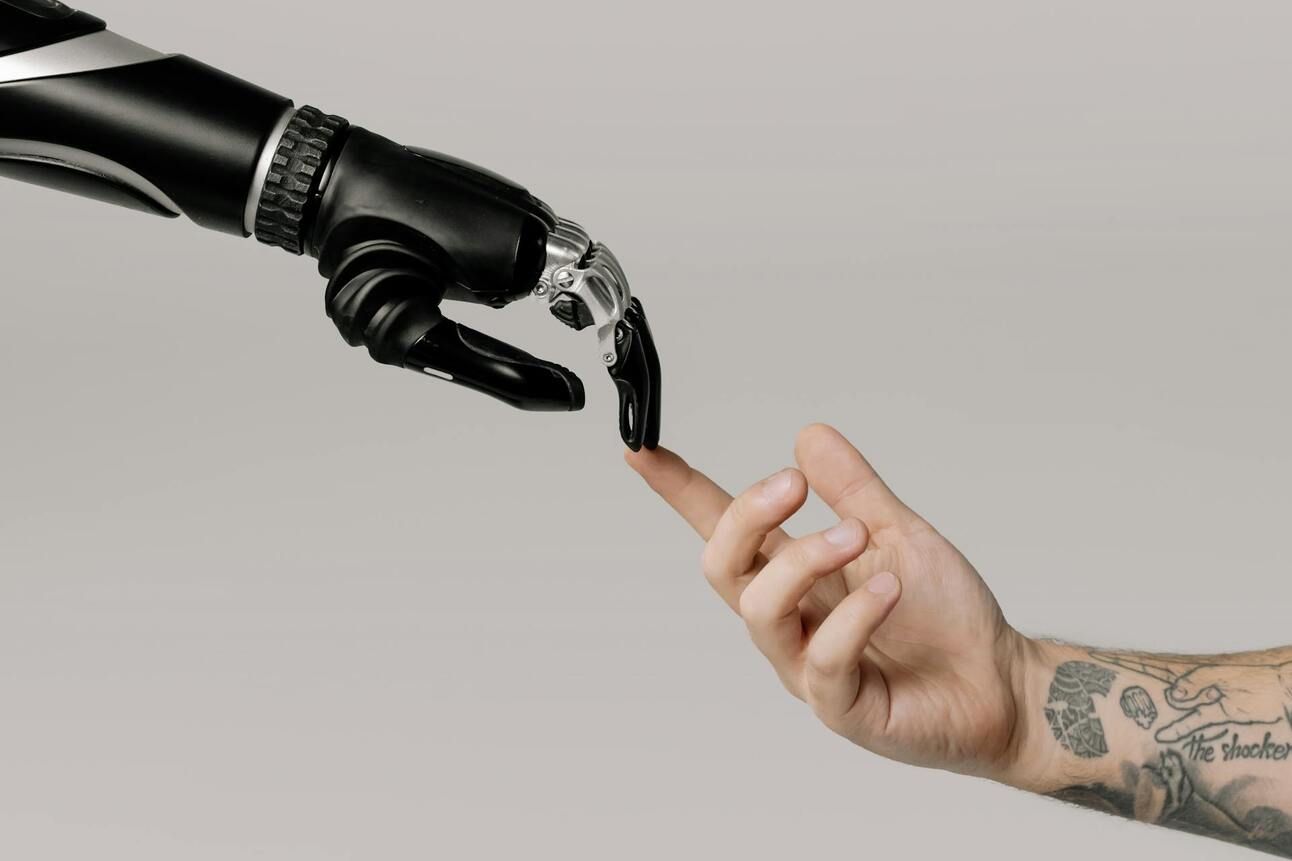
Photo by cottonbro studio: https://www.pexels.com/photo/bionic-hand-and-human-hand-finger-pointing-6153354/
TECH
AI has a stupid secret: we’re still not sure how to test for human levels of intelligence
Scale AI and the Center for AI Safety launched "Humanity’s Last Exam" to develop new questions for testing large language models (LLMs) like Google Gemini and OpenAI's o1. Read more.
The Point:
Challenge to Test AI Capabilities: Scale AI and the Center for AI Safety have launched "Humanity’s Last Exam" to assess the capabilities of large language models (LLMs) like Google Gemini and OpenAI’s o1. The initiative offers prizes for the top questions and aims to measure how close we are to achieving expert-level AI.
Limitations of Current AI Tests: Traditional tests, like bar exams, may not effectively measure AI capabilities since LLMs could have pre-learned the answers from massive datasets. As AI-generated content increasingly recirculates online, it risks contributing to "model collapse," which could degrade future AI performance.
Need for New AI Intelligence Benchmarks: Traditional benchmarks are limited in scope, such as Stockfish's chess expertise, which doesn’t imply broader intelligence. The Abstraction and Reasoning Corpus (ARC) by François Chollet aims to evaluate accurate AI intelligence by testing adaptation and generalization. Still, current AIs score far below human performance, underscoring the need for improved evaluation methods.
NATURE
Mistletoe – famous for stolen holiday kisses – is a parasite that steals water and nutrients from other plants
Mistletoe is a parasitic plant that grows on trees rather than in soil. It draws water and nutrients from its host through long-living rootlike structures called haustoria under the bark. Read more.
The Point:
A parasitic plant with festive fame: Mistletoe grows by siphoning water and nutrients from host trees using rootlike structures called haustoria. Though it rarely kills trees, heavy infestations can weaken them and lead to further damage.
Seeds that stick—and sometimes launch: Mistletoe berries, especially those of the dwarf variety, can launch sticky seeds up to 60 mph and 50 feet away, helping the plant spread across forests and landscapes.
Ecologically vital, culturally cherished: Despite its parasitic nature, mistletoe supports numerous animal species and pollinators. It’s also deeply embedded in holiday traditions, from Oklahoma’s state emblem to the kiss-under-the-mistletoe custom.
MATH AND THE SCIENCES
Why Your Straw Looks Odd In a Glass of Water
When light passes from air to water, it appears to bend due to a phenomenon called refraction, which occurs because light travels at different speeds in materials of varying densities. Read more.
The Point:
Refraction at work: When light moves from air into water, it changes speed due to the difference in density, causing it to bend. This refraction makes objects like straws appear bent or broken at the water's surface.
The science behind the slowdown: Light doesn’t truly slow down—it’s absorbed and reemitted by atoms in the medium, delaying its journey and creating the illusion of reduced speed. The material’s refractive index quantifies this effect.
Everyday illusion, rooted in physics: The skewed straw isn’t just a visual trick—it’s a tangible demonstration of how light interacts with matter. It’s a reminder that even the most ordinary moments can reveal the wonders of optics.