- The Point by Modern Sciences
- Posts
- Ancient Tools, the Universe’s Edge, and a ‘Grumpy’ Red Sea Fish
Ancient Tools, the Universe’s Edge, and a ‘Grumpy’ Red Sea Fish
The Point by Modern Sciences - January 8, 2025

Don Smith
January 08, 2025
In partnership with

By The Modern Sciences Team | January 8, 2025 |
Happy new year, Cultivators of Curiosity!
Welcome to the first volume of The Point by Modern Sciences in 2025, where we kick off the year with fascinating insights into human evolution, space exploration, and marine biodiversity. This edition delves into how the evolution of hunting tools in the Paleolithic era was shaped by prey size, explores the mystery of the observable universe’s edge, and introduces a newly discovered "grumpy" fish species in the Red Sea.
As we start the year, each article offers a unique perspective on the forces that have shaped our understanding of the world, from our ancestors' cognitive advancements to the vast and unexplored mysteries of space and the wonders of marine life. Dive in to discover how curiosity continues to drive scientific exploration in 2025.
HISTORY
Paleolithic Prey Size Drives Evolution of Hunting Tools and Human Cognition
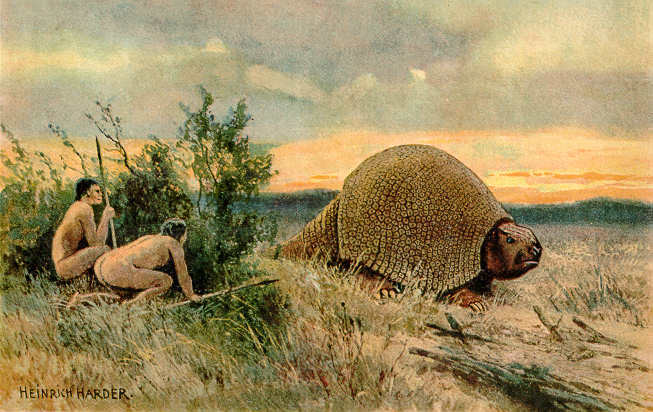
Over the Paleolithic era (1,500,000 to 20,000 years ago), human prey shifted from large animals like 12-ton elephants to smaller prey such as 25kg gazelles due to the diminishing availability of large megaherbivores. Read more.
The Point:
Correlation Between Hunting Tools and Prey Size: A study by Tel Aviv University proposes that the progressive decline in prey size during the Paleolithic era drove the development of increasingly sophisticated hunting tools as humans adapted to the diminishing availability of large prey.
Evolution of Hunting Strategies: Analysis of archaeological sites revealed a shift from hunting massive megafauna like 12-ton elephants in the early Paleolithic to more minor, agile prey like 25kg gazelles in later periods, necessitating advancements in hunting technology, such as bows and arrows.
Cognitive and Technological Evolution: The need to hunt more minor, more elusive animals with higher energy demands fostered traits like problem-solving and collaboration, linking the evolution of human cognitive abilities to advancements in hunting weapons and strategies.
Stay up-to-date with AI

The Rundown is the most trusted AI newsletter in the world, with 1,000,000+ readers and exclusive interviews with AI leaders like Mark Zuckerberg, Demis Hassibis, Mustafa Suleyman, and more.
Their expert research team spends all day learning what’s new in AI and talking with industry experts, then distills the most important developments into one free email every morning.
Plus, complete the quiz after signing up and they’ll recommend the best AI tools, guides, and courses – tailored to your needs.

Photo by Pavel Danilyuk: https://www.pexels.com/photo/medical-professional-holding-test-tube-sample-8442543/
LISTS
Transform STEM Teaching in 2025 with Labster Virtual Lab Experiment Books
As we approach the new year, university and college professors in STEM fields are gearing up for another cycle of innovation, learning, and discovery. For educators working in allied disciplines such as biology, genetics, and biochemistry and studying human diseases, staying prepared with practical teaching tools and resources is key to maximizing the opportunities that 2025 will bring. If you're looking for a way to enrich your teaching arsenal with cutting-edge STEM educational tools, the Labster Virtual Lab Experiments book series might be the solution. Read more.
SPACE
Curious Kids: What does the edge of the universe look like?
The concept of the universe's edge remains a mystery, and humans have been curious about it for centuries without a definitive answer. Telescopes have allowed us to see beyond our eyes' capabilities, revealing galaxies beyond our Milky Way in every direction. Read more.
The Point:
The Observable Universe: The universe has an "observable" edge, which refers to the farthest regions we can see. Due to the speed of light, we can only see light that has had enough time to travel to us, limiting our observations to about 96 billion light-years across.
Infinite or Finite: Scientists are still determining whether the universe is infinite or has an actual edge. Theories suggest the universe might continue indefinitely or that crossing its edge could lead to another universe entirely, though this remains speculative.
Endless Curiosity: The concept of the universe's edge is complex and uncertain, sparking endless human curiosity. Such questions drive scientific exploration, pushing us better to understand the vast universe and our place within it.
NATURE
Scientists Discover New “Grumpy” Fish Species in the Red Sea
Scientists discovered a new fish species called the "grumpy dwarf goby. " This species is known for its fierce appearance and large canine teeth despite its small size. Read more.
The Point:
New Fish Species Discovery: Scientists from King Abdullah University of Science and Technology and the University of Washington have identified a new fish species named the "grumpy dwarf goby," known for its small size (less than 2 cm) and fierce appearance, featuring large canine teeth and a distinctive "grumpy" expression.
Habitat and Behavior: The bright red grumpy dwarf goby lives in coral reefs, blending into its surroundings covered in red coralline algae. It inhabits small crevices and uses its sharp teeth to prey on tiny invertebrates, making it a unique predator in its environment.
Research Significance and Conservation: The fish was first discovered in the Farasan Banks of Saudi Arabia and later in the Red Sea, emphasizing the region's rich biodiversity. Researchers stress the importance of studying and conserving these ecosystems, particularly as they face environmental challenges like coral bleaching and habitat loss.