- The Point by Modern Sciences
- Posts
- World Heritage Reef Risks, Space Food Challenges, and Bats' Cognitive Abilities
World Heritage Reef Risks, Space Food Challenges, and Bats' Cognitive Abilities
The Point by Modern Sciences - September 30, 2024

Don Smith
September 30, 2024
In partnership with

By The Modern Sciences Team | September 27, 2024 |
Dear all Cultivators of Curiosity,
Welcome to the 21st edition of The Point by Modern Sciences! This issue explores the depths of endangered coral reefs, the mysteries of flavor perception in space, and the surprising intelligence of wild fruit bats.
First, we explore the alarming risks faced by Australia's World Heritage reefs beyond the Great Barrier Reef, shedding light on the urgent need for global conservation efforts. Next, we venture into the realm of astronaut cuisine, investigating why food loses its flavor in space and how virtual reality studies could help improve the dining experience for astronauts. Finally, we delve into a remarkable study on Egyptian fruit bats that challenges the notion of human-exclusive cognitive abilities, offering a new perspective on the mental complexity of the animal kingdom.
Each article presents unique insights into the natural world, human ingenuity, and the delicate balance of ecosystems on Earth and beyond.
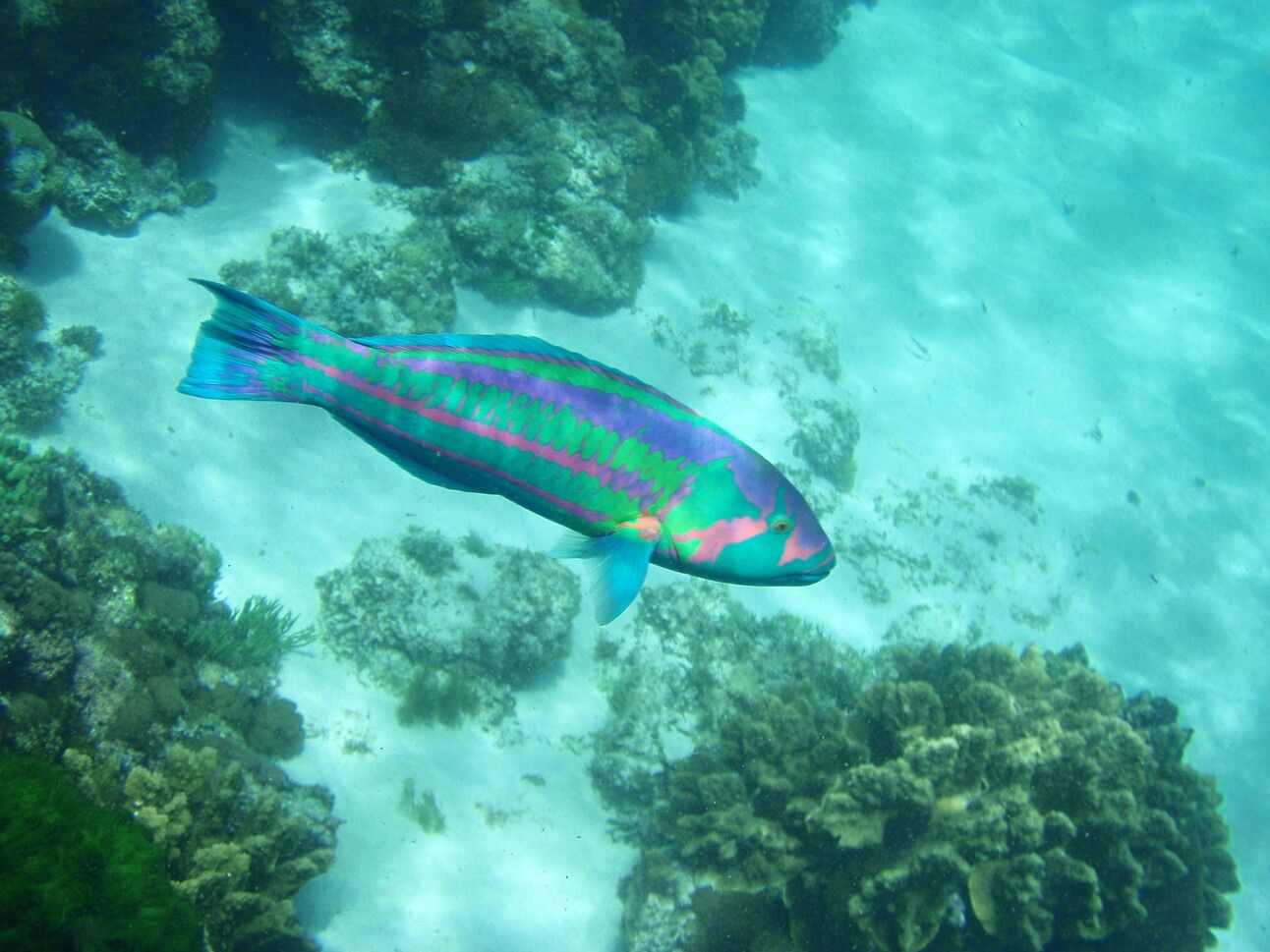
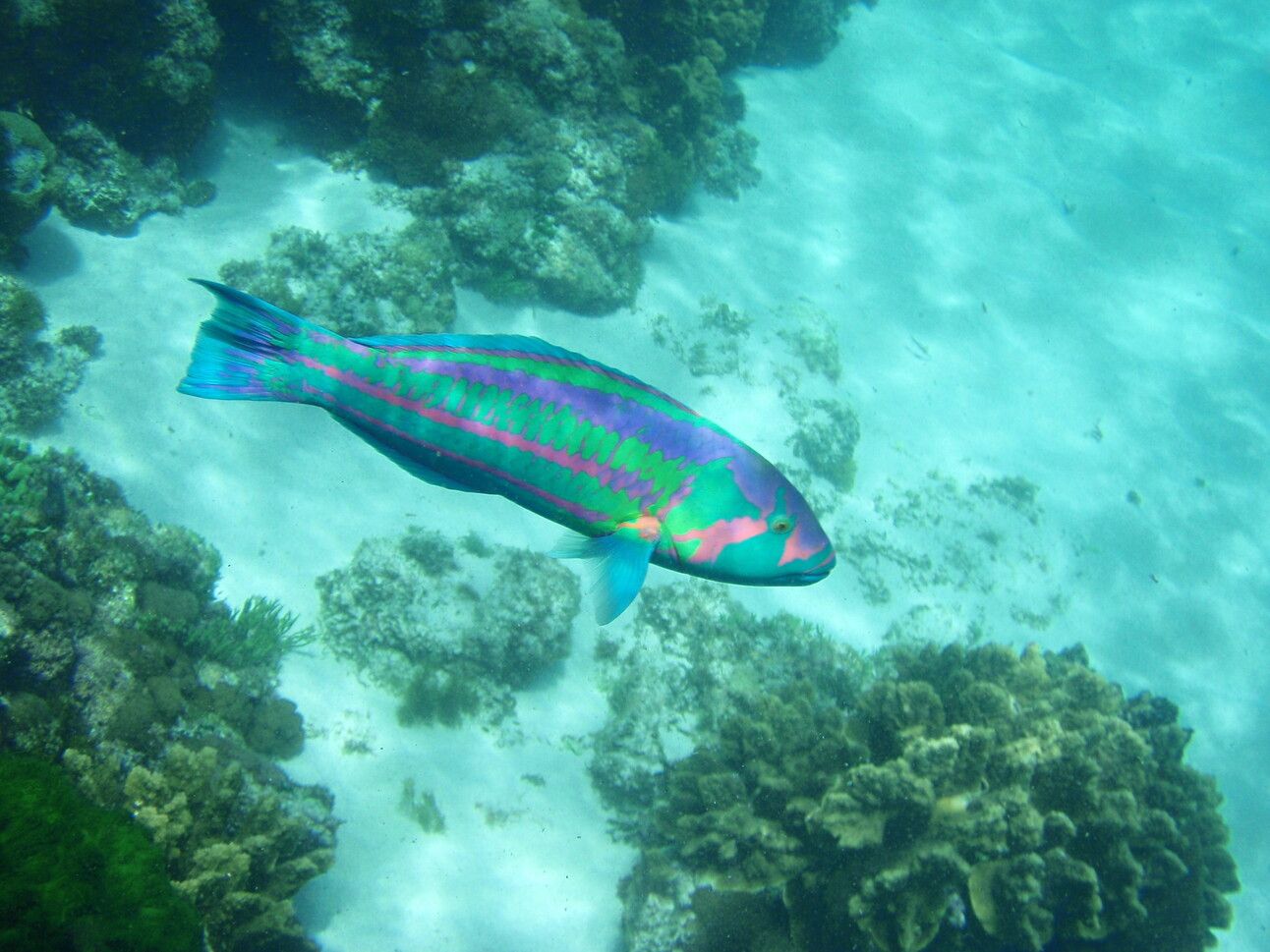
"Lord Howe Island snorkeling - Parrotfish (Family Sacridae)" by Percita is licensed under CC BY-SA 2.0.
EARTH
Beyond the Barrier Reef: Australia’s 3 other World Heritage reefs are also in trouble
New research indicates that Australia's four World Heritage reefs (Great Barrier Reef, Ningaloo, Shark Bay, and Lord Howe Island) are in greater danger than previously thought, with significant species and function loss expected due to climate change. Read more.
Essential observations:
Research Highlights Risks to Australia's World Heritage Reefs: A new study indicates that all four of Australia's World Heritage-listed reefs—the Great Barrier Reef, Ningaloo, Shark Bay, and Lord Howe Island—are at greater risk than previously thought due to climate change. Warming of 1.5°C could result in the extinction of about 20% of coral species, with nearly complete ecosystem collapse predicted at 2°C warming.
Reefs' Vulnerability to Warming: The study found that Ningaloo, Shark Bay, and Lord Howe Island reefs are most vulnerable to warming, with sea temperatures expected to rise by up to 1.3°C by the end of the century. This level of warming is enough to push many coral species to extinction, given their existing temperature tolerance limits.
Call for Increased Conservation Efforts: The findings suggest that current policies to cut greenhouse gases are insufficient to protect these reefs. More stringent measures are needed to limit warming to 1.5°C or below by 2050, requiring a 90% reduction in emissions by 2030. The study emphasizes the urgency of including all four reefs on the World Heritage "in danger" list to prompt stronger conservation actions.
Learn AI-led Business & startup strategies, tools, & hacks worth a Million Dollars (free AI Masterclass) 🚀

This incredible 3-hour Crash Course on AI & ChatGPT (worth $399) designed for founders & entrepreneurs will help you 10x your business, revenue, team management & more.
It has been taken by 1 Million+ founders & entrepreneurs across the globe, who have been able to:
Automate 50% of their workflow & scale your business
Make quick & smarter decisions for their company using AI-led data insights
Write emails, content & more in seconds using AI
Solve complex problems, research 10x faster & save 16 hours every week
LISTS
From Dinosaurs to Quantum Reality: A Reading Guide for Science Enthusiasts
Science is full of mysteries that challenge our understanding of the world, its origins, and even the fabric of reality. Fortunately, some of the best minds in science have shared their insights and discoveries through captivating books that explore these profound questions. From the secrets of our genomes to the hidden wonders of the universe, these books offer a deep dive into the frontiers of scientific knowledge. For science enthusiasts and curious minds, this curated list highlights some of the most thought-provoking reads that blend history, research, and discovery. Read more.
SPACE
Astronauts don’t eat enough because food tastes bland in space. We’re trying to work out why
Researchers discovered that food perceived as flavorful on Earth often becomes bland in space due to altered sensory experiences in a spacecraft's environment, affecting astronauts' appetite and enjoyment of food. Read more.
Summary insights:
Challenges in Space Eating: Despite carefully designed diets, astronauts often find food bland in space. This could be due to the lack of gravity causing bodily fluids to shift towards the head, mimicking the effect of a blocked nose and impairing the sense of smell, a crucial component in experiencing food flavor.
VR Study on Food Perception: Researchers at RMIT University used virtual reality to simulate the International Space Station environment and study how space travel affects the perception of food aromas. Researchers discovered that the simulated space environment intensified the perception of some sweet-smelling compounds, such as those found in vanilla and almond, compared to a control environment.
Implications for Space and Earth: By comprehending the perception of aromas in space, we can enhance the design of space menus, potentially incorporating sweet aromas as flavor enhancers. This research could also benefit people in isolated environments on Earth, such as nursing home residents or military personnel, by tailoring food aromas to improve their eating experience and overall well-being.
NATURE
Researchers Uncover Cognitive Abilities in Wild Fruit Bats
Researchers investigated the cognitive abilities of free-ranging Egyptian fruit bats, traditionally considered unique to humans. These abilities included episodic memory, mental time travel, planning, and delayed gratification. Read more.
Important details:
Study Overview: Researchers conducted a groundbreaking study on free-ranging Egyptian fruit bats to explore their cognitive abilities, traditionally considered unique to humans, such as episodic memory, mental time travel, planning, and delayed gratification.
Key Findings: The study revealed that bats could create mental maps of their environment, track food sources spatially and temporally, and exhibit future planning by flying directly to specific trees for better rewards, even bypassing closer options.
Implications: These findings challenge the traditional view that advanced cognitive abilities are exclusive to humans. They highlight complex cognitive processes in animals and suggest that the gap between human and animal cognition may be less distinct than previously thought.