- The Point by Modern Sciences
- Posts
- Animal Co-Culture, a Potential Ocean Exoplanet, and Olive Oil Hangover Myths
Animal Co-Culture, a Potential Ocean Exoplanet, and Olive Oil Hangover Myths
The Point by Modern Sciences - September 25, 2024

Don Smith
September 25, 2024
By The Modern Sciences Team | September 25, 2024 |
Dear all Cultivators of Curiosity,
Welcome to the 20th edition of The Point by Modern Sciences. This volume offers fresh perspectives on animal behavior, the search for life beyond Earth, and the science behind common health myths.
We begin with the intriguing concept of "co-culture," exploring how different animal species coexist and influence each other's behaviors. This discovery could reshape our understanding of cultural evolution across species. Then, we journey to the newly discovered exoplanet LHS 1140 b, a rocky "super-Earth" that might hold life-sustaining oceans in its "Goldilocks zone." Finally, we tackle the widespread belief in using olive oil as a hangover cure, breaking down what science says about alcohol metabolism and what works to prevent those morning-after regrets.
Dive in to see how these topics intertwine with our quest for knowledge, both in the animal kingdom and the cosmos, and in the pursuit of practical health advice.
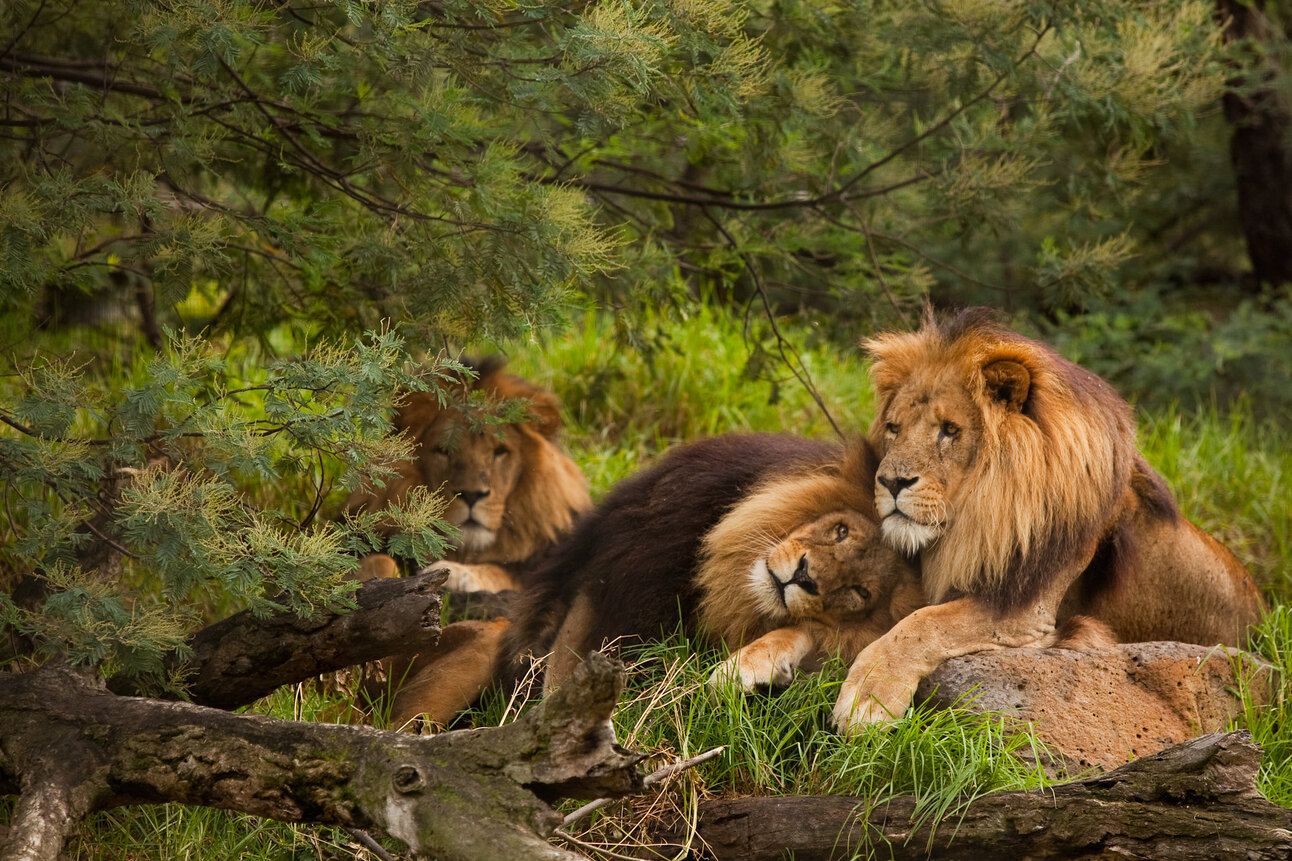
"Lion Gay Pride" by laubarnes is licensed under CC BY-NC-SA 2.0.
NATURE
New Term 'Co-Culture' Explains How Animals Influence Each Other’s Behavior
Researchers propose "co-culture" to describe mutual cultural behavior sharing between different animal species, highlighting significant mutual influences beyond simple imitation. Read more.
Major insights:
Introduction of Co-culture Concept: In an opinion piece in Trends in Ecology & Evolution, researchers Cédric Sueur and Michael Huffman propose the concept of "co-culture" to describe how different animal species share and mutually influence cultural behaviors, going beyond mere observation and imitation.
Significance of Co-culture: Co-culture holds significance as it challenges the conventional belief that culture is exclusive to a single species and highlights the interdependence of behaviors among various species. Examples include human-honeyguide relationships in Africa and cooperative scavenging between ravens and wolves, demonstrating that such cultural interactions can enhance survival and drive evolutionary changes.
Implications and Future Research: The researchers suggest exploring co-culture in urban environments, where humans and animals mutually influence behaviors and adaptations. Understanding these interactions could provide valuable insights into the interplay of cultural and genetic evolution, with potential applications in conservation and urban planning.
🦾 Master AI & ChatGPT for FREE in just 3 hours 🤯
1 Million+ people have attended, and are RAVING about this AI Workshop.
Don’t believe us? Attend it for free and see it for yourself.

Highly Recommended: 🚀
Join this 3-hour Power-Packed Masterclass worth $399 for absolutely free and learn 20+ AI tools to become 10x better & faster at what you do
🗓️ Tomorrow | ⏱️ 10 AM EST
In this Masterclass, you’ll learn how to:
🚀 Do quick excel analysis & make AI-powered PPTs
🚀 Build your own personal AI assistant to save 10+ hours
🚀 Become an expert at prompting & learn 20+ AI tools
🚀 Research faster & make your life a lot simpler & more…
LISTS
From Dinosaurs to Quantum Reality: A Reading Guide for Science Enthusiasts
Science is full of mysteries that challenge our understanding of the world, its origins, and even the fabric of reality. Fortunately, some of the best minds in science have shared their insights and discoveries through captivating books that explore these profound questions. From the secrets of our genomes to the hidden wonders of the universe, these books offer a deep dive into the frontiers of scientific knowledge. For science enthusiasts and curious minds, this curated list highlights some of the most thought-provoking reads that blend history, research, and discovery. Read more.
SPACE
New Exoplanet LHS 1140 b May Host Life-Sustaining Liquid Ocean
LHS 1140 b, a newly discovered exoplanet, could have a life-sustaining ocean, as suggested by recent observations using the James Webb Space Telescope. Read more.
Salient points:
Potentially Life-Sustaining Exoplanet: The newly discovered exoplanet LHS 1140 b, identified using the James Webb Space Telescope, could be the first exoplanet outside our solar system with a potentially life-sustaining ocean. It is one of the few known exoplanets situated in the "Goldilocks zone," the ideal distance from its star to support liquid water, which is essential for life.
Characteristics and Proximity: Previously believed to be a gas giant, scientists have reclassified LHS 1140 b as a rocky "super-Earth," larger than Earth but smaller than Uranus. It is 1.7 times the size of Earth and has 5.6 times its mass. It is located 48 light years away, a relatively close distance in astronomical terms.
Observations and Further Research: Observations reveal that LHS 1140 b lacks the thick hydrogen and helium atmosphere of a gas giant, suggesting significant amounts of water that could constitute 10 to 20 percent of its mass. Researchers plan to use additional time on the Webb telescope to confirm the presence of an atmosphere and detect carbon dioxide, which would indicate the potential for liquid water and life-supporting conditions.
|

HEALTH AND THE BODY
Some say a shot of olive oil can prevent a hangover – here’s what the science says
The idea that taking a shot of olive oil before drinking alcohol can prevent hangovers has gained attention but lacks scientific evidence. Read more.
Principal observations:
Unproven Hangover Cure: The popular idea of taking a shot of olive oil before drinking alcohol to prevent hangovers lacks scientific evidence. Research does not support the claims that olive oil can coat the stomach and slow alcohol absorption, so we should approach this theory with skepticism.
Alcohol Absorption and Metabolism: Although fatty foods like olive oil can slow down the stomach's absorption of alcohol, the small intestine absorbs most of it. Additionally, olive oil does not influence the liver's alcohol metabolism, which primarily causes hangover symptoms.
Effective Hangover Prevention: Proven methods to prevent hangovers include staying hydrated, eating a nutritious meal before drinking, consuming alcohol in moderation, and replenishing lost electrolytes and nutrients after drinking. These approaches are more effective than relying on the unproven olive oil method.