- The Point by Modern Sciences
- Posts
- Revamping the LHC, Unearthing Trilobites, and Gene Editing for Space
Revamping the LHC, Unearthing Trilobites, and Gene Editing for Space
The Point by Modern Sciences - August 14, 2024

Don Smith
August 14, 2024
In partnership with


By The Modern Sciences Team | August 14, 2024 |
Dear Cultivators of Curiosity,
Welcome to the 12th edition of The Point by Modern Sciences! In this landmark issue, we plunge into the intricacies of subatomic particle collisions at CERN's Large Hadron Collider, marvel at the discovery of exceptionally preserved trilobites likened to a 'trilobite Pompeii,' and delve into the controversial debate on using gene editing for human space exploration.
Each article illuminates the cutting edge of science where the past meets future technologies. It showcases how precise engineering, paleontological treasures, and ethical quandaries over genetic modifications converge in our quest to understand the universe and our place within it. Join us as we explore these profound topics, each offering vital insights into the complex tapestry of life, Earth, and beyond.
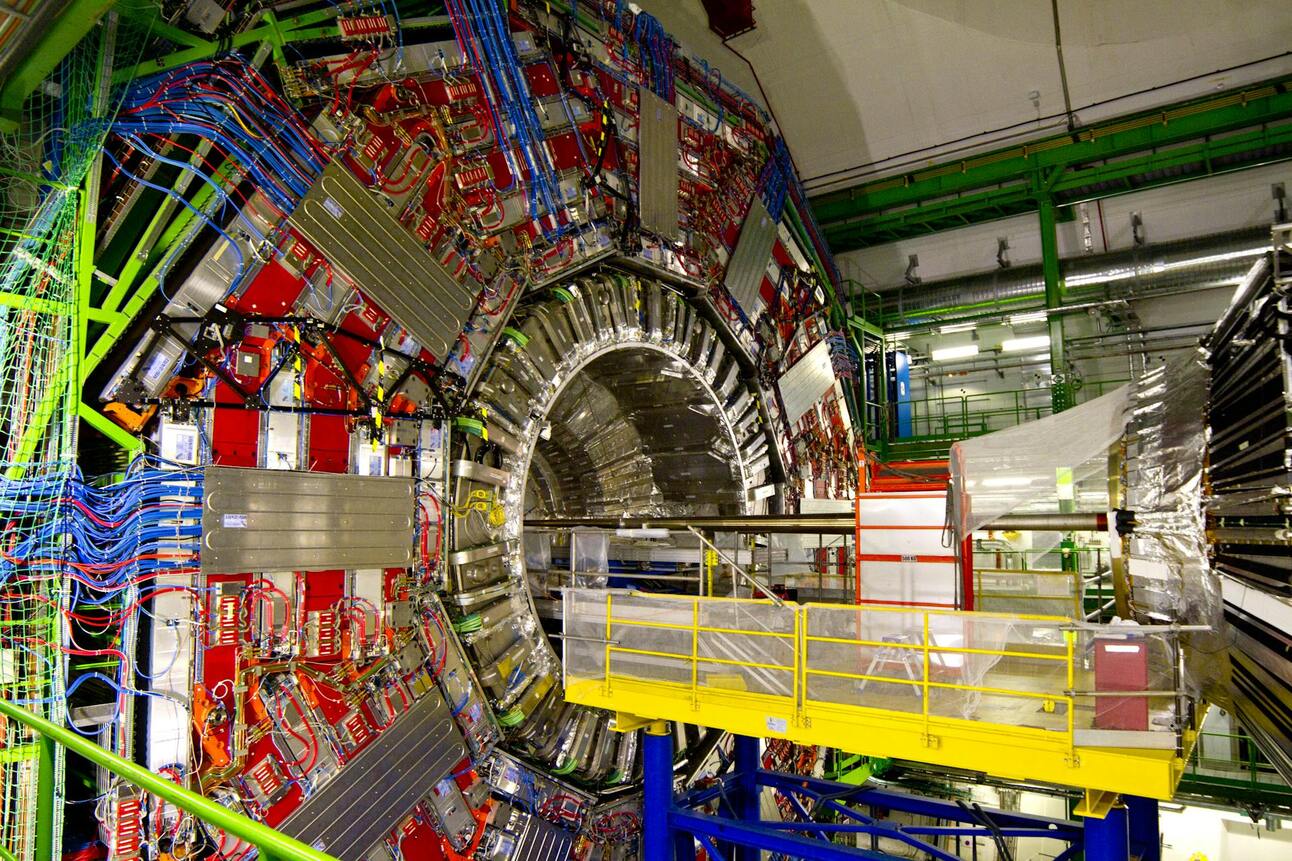
Photo by Ramaz Bluashvili: https://www.pexels.com/photo/the-large-hadron-collider-at-geneva-switzerland-6855582/
MATH AND THE SCIENCES
The Large Hadron Collider gets reset and refreshed each year – a CERN physicist explains how the team uses subatomic splashes to restart the experiments
A yearly reset is necessary for major physics experiments like the Large Hadron Collider (LHC) at CERN to ensure proper calibration of all equipment for accurate data collection. Physicists and engineers prepare the LHC and its experiments, such as ATLAS, for a new season of data gathering by testing and calibrating equipment using cosmic rays and controlled particle collisions. Read more.
Key notes:
Preparing for Particle Collisions: Unlike everyday devices, the Large Hadron Collider (LHC) at CERN requires a few weeks each year for a detailed reset process. Physicists and engineers at CERN meticulously calibrate the collider and its experiments, such as ATLAS, to ensure accurate data collection from particle collisions.
Testing with Cosmic Rays and Beam Splashes: During the initial phase of restarting the LHC, cosmic rays serve as natural test particles for calibrating detectors. For more controlled tests, "beam splashes" are used. Protons collide with a collimator to produce a predictable wave of particles, which aids in verifying the synchronization and data recording capabilities of the detectors.
Calibrating Specific Detectors with Muons: Certain detectors, like the Tile calorimeter in the ATLAS experiment, require additional calibration. Horizontal muons, generated by slightly grazing the collimator with protons, achieve this calibration. These muons, which pass through the calorimeter tiles, ensure accurate data collection by the detector. After thorough testing, the LHC is ready to accelerate protons to their maximum energy for new particle collisions and potential discoveries.
Learn AI-led Business & startup strategies, tools, & hacks worth a Million Dollars (free AI Masterclass) 🚀

This incredible 3-hour Crash Course on AI & ChatGPT (worth $399) designed for founders & entrepreneurs will help you 10x your business, revenue, team management & more.
It has been taken by 1 Million+ founders & entrepreneurs across the globe, who have been able to:
Automate 50% of their workflow & scale your business
Make quick & smarter decisions for their company using AI-led data insights
Write emails, content & more in seconds using AI
Solve complex problems, research 10x faster & save 16 hours every week
NATURE
A ‘trilobite Pompeii’: perfectly preserved fossils of ancient sea critters found buried in volcanic ash
A new study has documented the most anatomically complete trilobite fossils ever found. They were preserved in volcanic ash in Morocco and revealed soft body parts like antennae, walking legs, mouth structures, and the entire digestive system. Read more.
Principal observations:
Exceptional Trilobite Preservation: A groundbreaking study reveals Moroccan trilobites preserved in volcanic ash, showcasing the most anatomically complete examples, including rare soft body parts like antennae, walking legs, and digestive systems.
Unique Fossilization Process: These 509-million-year-old trilobites were rapidly buried by pyroclastic flows, creating undistorted three-dimensional molds similar to the preservation seen in Pompeii. The molds captured intricate details down to tiny bristles on their legs.
New Insights into Trilobite Anatomy: The discovery unveils previously unknown features, such as a sophisticated feeding apparatus with "spiny spoons" and a fleshy lip called the labrum, enhancing our understanding of arthropod mouthpart evolution and highlighting volcanic ash deposits as valuable fossil sources.
SPACE
If we want to settle on other planets, we’ll have to use genome editing to alter human DNA
Genome editing is being considered to help humans tolerate harsh conditions in space, potentially making human exploration of the Moon, Mars, and beyond more feasible. Read more.
Salient points:
Debate on Human vs. Robotic Mars Exploration: A recent debate between Lord Martin Rees and Dr. Robert Zubrin at the British Interplanetary Society discussed the merits of human versus robotic exploration of Mars. While Lord Rees advocates for robotic missions due to lower costs and risks, he and Dr. Zubrin agree on the potential of gene editing to help humans overcome challenges in becoming an interplanetary species.
Potential of Gene Editing for Space Travel: Gene editing technologies like Crispr-Cas9, base editing, and prime editing have revolutionized our ability to modify genomes. These tools could enhance human resilience to space hazards such as radiation, slow aging, and develop crops resistant to radiation. These advancements could make long-term space travel and settlement more feasible.
Ethical and Regulatory Challenges: The use of gene editing, especially to enhance humans for space travel, raises significant ethical and regulatory concerns. While some countries, like Germany and Canada, have strict regulations, others, such as China, are more open to experimentation. The global community must address these ethical concerns and decide how far to go with gene editing to ensure the responsible use of this powerful technology in the quest for space exploration.