- The Point by Modern Sciences
- Posts
- Dark matter: our new experiment aims to turn the ghostly substance into actual light
Dark matter: our new experiment aims to turn the ghostly substance into actual light
The Point by Modern Sciences - July 17, 2024

Don Smith
July 17, 2024
In partnership with

By The Modern Sciences Team | July 17, 2024 |
Dear Cultivators of Curiosity,
Welcome to the 7th edition of The Point by Modern Sciences. This volume ventures into the realm of hidden worlds and historical impacts, demonstrating the interconnectedness of our past actions with future possibilities.
From a groundbreaking experiment at Yale aiming to illuminate the mysteries of dark matter to the ancient termite mounds in South Africa serving as critical carbon storages and the ongoing restoration struggles of Notre Dame Cathedral revealing centuries of human influence on nature, each article invites you to explore how understanding these phenomena is crucial not only for scientific advancement but also for fostering a sustainable future. Discover how each story connects the dots between discovery, history, and sustainability.
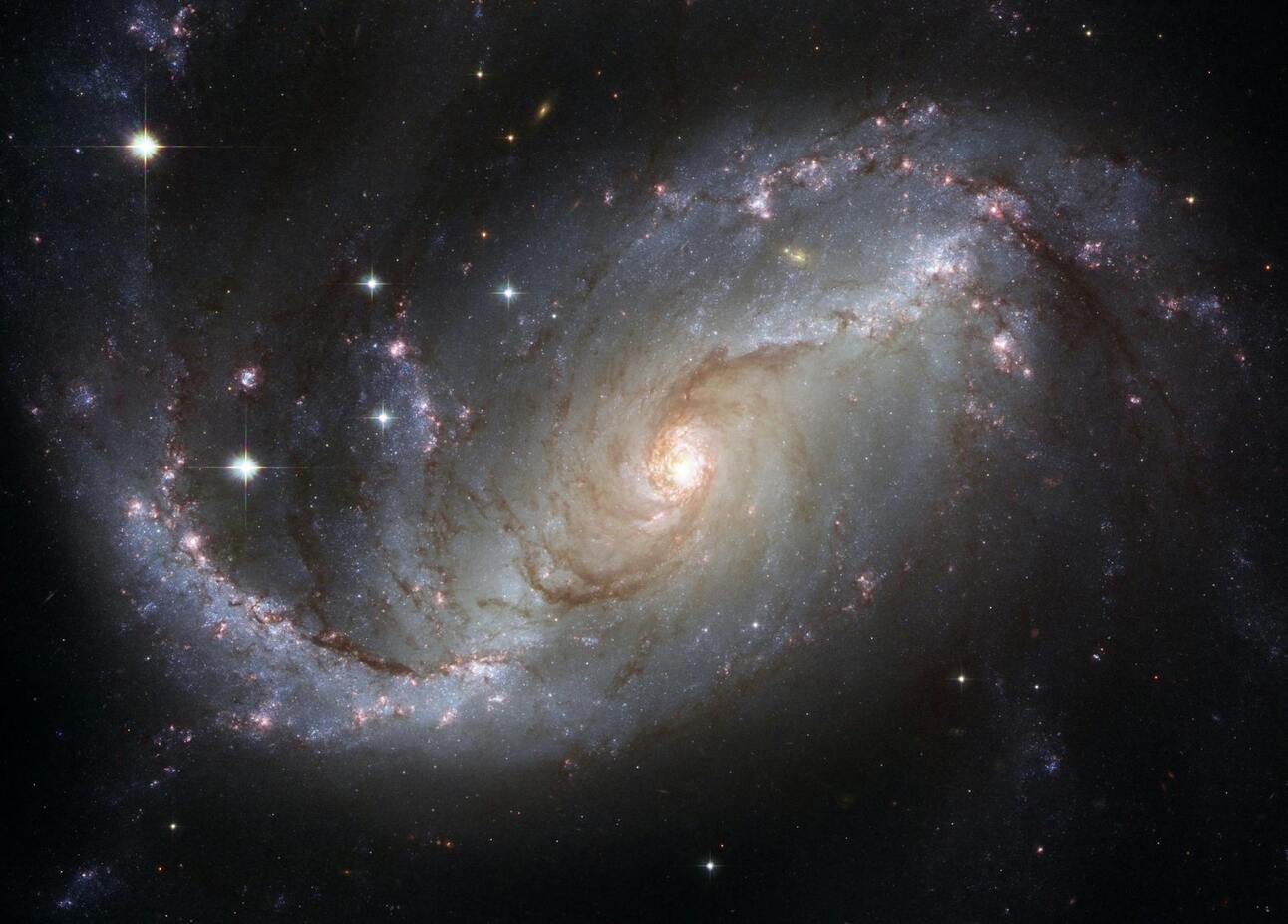
Photo by Pixabay: https://www.pexels.com/photo/gray-and-black-galaxy-wallpaper-2150/
SPACE
Dark matter: our new experiment aims to turn the ghostly substance into actual light
Initially proposed to resolve the neutron problem, axions have emerged as leading candidates for dark matter due to their properties aligning with the characteristics expected for dark matter. They are predicted to interact with other particles weakly and may transform into ordinary particles, including photons, under specific conditions. Read more.
Pivotal points:
New Dark Matter Experiment: Researchers at Yale University are building the Axion Longitudinal Plasma Haloscope (Alpha) experiment to explore dark matter, focusing on a new tactic involving axions, hypothetical particles that could solve the neutron's electric dipole moment problem and explain dark matter.
Axion Properties and Detection: Axions, theoretical particles weakly interacting with other particles, may convert into photons in the presence of a magnetic field. The Alpha experiment aims to detect this conversion using a cavity filled with conductive rods, allowing the cavity to capture signals at high frequencies that would be otherwise undetectable.
Interdisciplinary Collaboration: The development of the Alpha experiment, involving solid-state physicists, electrical engineers, particle physicists, and mathematicians, exemplifies the interdisciplinary effort required to advance our understanding of dark matter and potentially uncover the elusive axion particles.
Learn AI Strategies worth a Million Dollar in this 3 hour AI Workshop. Join now for $0
Everyone tells you to learn AI but no one tells you where.
We have partnered with GrowthSchool to bring this ChatGTP & AI Workshop to our readers. It is usually $199, but free for you because you are our loyal readers 🎁

This workshop has been taken by 1 Million people across the globe, who have been able to:
Build business that make $10,000 by just using AI tools
Make quick & smarter decisions using AI-led data insights
Write emails, content & more in seconds using AI
Solve complex problems, research 10x faster & save 16 hours every week
You’ll wish you knew about this FREE AI Training sooner (Btw, it’s rated at 9.8/10 ⭐)
NATURE
World’s oldest termite mounds discovered in South Africa – and they’ve been storing precious carbon for thousands of years
Radiocarbon dating revealed that these termite mounds in Namaqualand are between 34,000 and 13,000 years old. This makes them the oldest inhabited termite mounds known globally, surpassing previous records in Brazil and central Congo. Read more.
Key notes:
Ancient Termite Mounds: Radiocarbon dating reveals that Namaqualand's heuweltjies are the world's oldest inhabited termite mounds, dating back as far as 34,000 to 13,000 years. This discovery provides a unique glimpse into past environmental conditions, offering insights into how landscapes have evolved over millennia.
Carbon Sequestration: Termite mounds act as significant carbon sinks in semi-arid environments like Namaqualand. The mounds store organic carbon underground, preventing its release into the atmosphere. This natural process is crucial for mitigating climate change and underscores the importance of preserving termite habitats.
Environmental Impact and Policy: Despite their ecological value, termite mounds are often cleared for agriculture, threatening their role as carbon sinks. Integrating the study's findings into environmental policies can help protect these natural carbon storage systems and promote sustainable land use practices.
HISTORY
Humans have been altering nature for thousands of years – to shape a sustainable future, it’s important to understand that deep history
Historical and archaeological research is crucial for understanding past ecosystems and guiding modern conservation and reforestation efforts, such as those in Europe. Using historical insights, scientists can develop strategies to address current environmental challenges. They aim to create a more resilient and sustainable future without returning to a past pristine state. Read more.
Top insights:
Notre Dame Cathedral Restoration: The iconic Notre Dame Cathedral, severely damaged by a fire in 2019, is undergoing restoration and will not be completed by the time of the 2024 Summer Olympics in Paris. The scarcity of suitable tall oak trees due to historical deforestation in Europe challenges the restoration efforts.
Long-term Human Impact on Forests: European deforestation has a history spanning at least 10,000 years, driven by early agriculture, the Industrial Revolution, and extensive land clearing. Archaeological evidence and historical records reveal significant forest cover loss, prompting current reforestation efforts to combat climate change and species loss.
Learning from History for a Sustainable Future: Understanding past ecosystems and human interactions with nature provides crucial insights for modern conservation efforts. Historical knowledge aids in reforestation, biodiversity conservation, and anticipating environmental challenges, helping to create a more resilient and sustainable future.