- The Point by Modern Sciences
- Posts
- Armenian Researchers Uncover Secrets of Star-Forming Regions in Interstellar Space
Armenian Researchers Uncover Secrets of Star-Forming Regions in Interstellar Space
The Point by Modern Sciences - July 10, 2024

Don Smith
July 10, 2024
In partnership with

By The Modern Sciences Team | July 10, 2024 |
Welcome, Cultivators of Curiosity!
Welcome to the 6th edition of The Point by Modern Sciences! This issue brings you a blend of astronomical discoveries, fitness insights, and groundbreaking medical research.
Armenian researchers reveal the secrets of star-forming regions, offering new perspectives on so-called “young stellar objects.” Learn about the benefits of compound exercises, including how they improve functional strength and overall fitness. Finally, explore innovative methods for combating antibiotic resistance with nonantibiotic drugs. Dive in to see how these scientific advancements connect to various aspects of our lives.

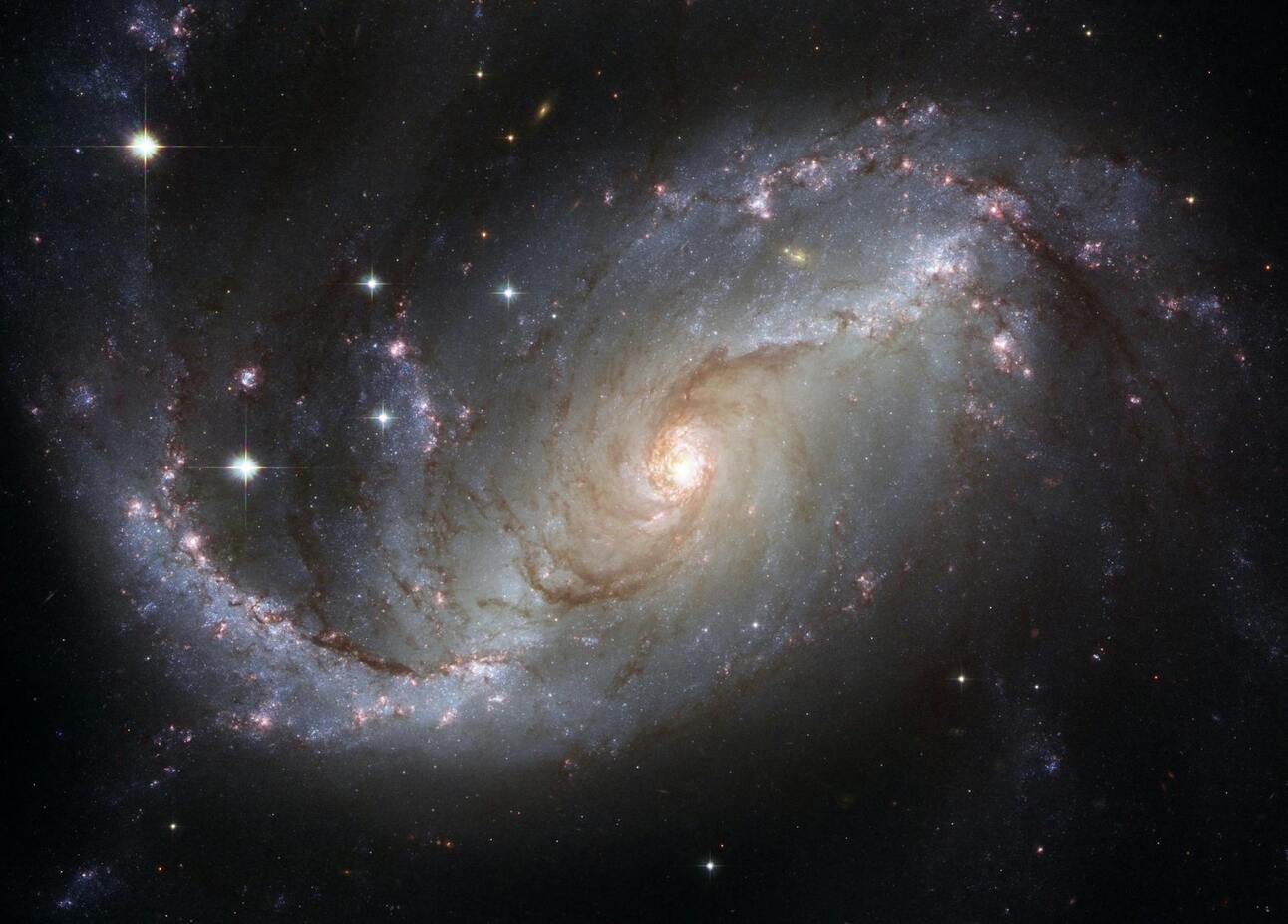
Photo by chris clark from Pexels: https://www.pexels.com/photo/high-curvy-stony-formation-under-starry-shiny-night-sky-5604854/
SPACE
Armenian Researchers Uncover Secrets of Star-Forming Regions in Interstellar Space
Armenian researchers studied three star-forming regions using data from space telescopes and astronomical surveys. They identified hundreds of young stellar objects and provided insights into their stellar content and interstellar medium. Read more.
Top points:
Study of Star-Forming Regions: Armenian researchers have utilized data from space telescopes and astronomical surveys to investigate three vital star-forming regions, uncovering crucial information about the formation and evolution of young stellar objects (YSOs).
Detailed Analysis and Findings: The study focused on regions IRAS 05137+3919, IRAS 05168+3634, and IRAS 19110+1045. It identified significant YSOs and revealed diverse formation scenarios, including independent formation in molecular clouds and ultra-compact HII regions.
Interstellar Medium Insights: The researchers provided valuable insights into the interstellar medium's characteristics by examining the hydrogen column density and dust temperature. They compared YSO parameters with radiation-transfer models to highlight different formation scenarios for the stellar populations.
Become an AI-Powered Finance Decisions to get 10x ROI on your money (free AI masterclass) 🚀

More than 300 million people use AI, but less than 0.03% use it to build investing strategies. And you are probably one of them.
It’s high time we change that. And you have nothing to lose – not even a single $$
Rated at 9.8/10, this masterclass will teach how you to:
Do market trend analysis & projections with AI in seconds
Solve complex problems, research 10x faster & make your simpler & easier
Generate intensive financial reports with AI in less than 5 minutes
Build AI assistants & custom bots in minutes
HEALTH AND THE BODY
What are compound exercises and why are they good for you?
Resistance training consists of compound exercises involving multiple joints and muscle groups and isolation exercises targeting a single joint and muscle. Compound exercises include push-ups, squats, deadlifts, and chin-ups, mimicking everyday movements like lifting objects and standing up. Read more.
Core findings:
Difference Between Compound and Isolation Exercises: Compound exercises engage multiple joints and muscle groups simultaneously, such as squats and push-ups, whereas isolation exercises target a single joint and muscle, like bicep curls and tricep extensions.
Benefits of Compound Exercises: Compound movements mimic daily activities, making them essential for maintaining functional strength as we age. They also allow lifting heavier weights, which builds muscle strength more efficiently and enhances athletic performance.
Role of Isolation Exercises: Isolation exercises are beneficial for targeting specific muscles, are easier to learn, and are effective for building strength and muscle mass, especially when integrated into a well-designed workout that includes both exercise types.
HEALTH AND THE BODY
Drugs that aren’t antibiotics can also kill bacteria − new method pinpoints how
Overuse of antibiotics has led to the evolution of drug-resistant bacteria, causing an estimated 1.27 million deaths worldwide in 2019 and posing an increasing threat to global public health. Read more.
Major highlights:
Historical Impact of Antibiotics: The discovery of antibiotics in 1928 revolutionized medical practice, transforming lethal infections into treatable conditions and making surgeries safer by reducing the risk of infection.
Challenge of Antibiotic Resistance: Overuse of antibiotics has led to the evolution of drug-resistant bacteria, or superbugs, which caused 1.27 million deaths worldwide in 2019, posing a growing threat to global public health.
Innovative Research Approaches: New studies, including research from the Mitchell Lab at UMass Chan Medical School, are exploring nonantibiotic drugs' ability to kill bacteria and using machine learning to identify new bacterial targets, offering promising avenues to combat antibiotic resistance.